Magnesium Glycinate
Magnesium bisglycinate Amount not publishedThe best-established nutrition in the formula, in the form most people tolerate best — and the one where a missing number matters most.
Read moreSix detailed pages, one per ingredient — what each is, what the research actually found, how much the studies used, and what its inclusion here can and cannot mean.
Each page follows the same structure: what the ingredient is, what published research has found, what its presence in this formula means, and the safety points worth knowing.
Every page also states the amounts used in research, because that is the comparison the seller's material cannot support — it names all six ingredients and publishes an amount for none of them, a gap it acknowledges itself.
Sorted honestly by the strength of the evidence, the six fall into tiers:
Strongest: magnesium, whose role in normal nerve and muscle function is established nutrition rather than marketing, and alpha lipoic acid, which has the most relevant nerve research of anything in the formula — and the interaction you most need to know about.
Good, with a specific caveat: butcher's broom, which has genuine venous circulation evidence, though for legs rather than nerves; and CoQ10, whose biochemical role is real but which is studied at amounts hard to fit in a shared capsule.
Real but heavily qualified: L-carnitine, where the nerve research used a specific form at gram-scale amounts, and turmeric, where curcumin's poor absorption decides whether anything happens at all.
Credit first: the seller tells you this itself. Its own wording is that all six ingredients are named but exact per-capsule amounts are not published, and that this is the honest context for setting expectations. Volunteering that is rare in this category and it should count in the product's favour.
It remains the central gap, though, because naming an ingredient tells you what is in the bottle while only an amount tells you whether there is enough of it to matter.
Why this matters arithmetically. A standard capsule holds roughly 500–800 mg of material in total. Alpha lipoic acid alone, at the amounts used in nerve research, would fill most of one. Add a nutritionally meaningful amount of magnesium, plus CoQ10, plus gram-scale L-carnitine, and the studied amounts run to several grams a day. Six ingredients cannot all appear at research levels in a single capsule — there is not physically room. That is true of every six-ingredient single-capsule formula, and it is precisely why the amounts should be published.
The one question worth asking the seller before you buy is the milligram amount of each ingredient per capsule. It would be a single line to answer, and for alpha lipoic acid it is a safety question as much as a value one.
Each with a link to its full page.
The best-established nutrition in the formula, in the form most people tolerate best — and the one where a missing number matters most.
Read moreThe headline ingredient, with the most relevant nerve research of the six — and the one carrying a real drug interaction you need to know about.
Read moreHeavily researched, and held back by an absorption problem that decides whether it does anything at all.
Read moreGenuine biochemistry behind it, studied at amounts that are difficult to fit alongside five other ingredients.
Read moreThe formula’s most distinctive choice, with better evidence than most people expect — for a specific circulatory use.
Read moreReal nerve-related research exists, but it used a particular form at gram-scale amounts.
Read moreA named ingredient list is a real improvement on a proprietary blend, and the seller provides one — then tells you plainly that the amounts are not published.
But naming is not dosing. The research summarised across these six pages used specific amounts: 300–600 mg of alpha lipoic acid, 100–300 mg of CoQ10, grams of L-carnitine, and a magnesium requirement measured in hundreds of milligrams. Added together those run to several grams a day, and a capsule holds a fraction of that.
For alpha lipoic acid the missing figure is also a safety matter, because its effect on blood sugar is dose-dependent.
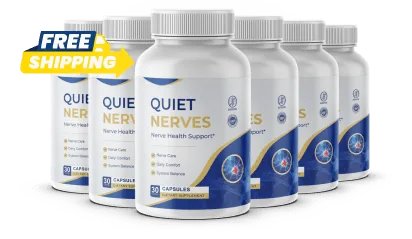

The seller states a 60-day money-back guarantee running from the date of purchase, arranged through customer support, with no subscription, no automatic renewals and no rebills — a one-time payment for what is in your cart.
The seller says nutritional support of this kind is gradual and should be judged over several weeks of consistent use rather than days. That is an honest statement, and a 60-day window is long enough to act on it — which is not always true of guarantees in this category.
The tension is with package size rather than with the window itself. A two-bottle order is a 60-day supply and matches the guarantee exactly, while the six-bottle order runs 180 days — three times longer than your right to a refund. If you buy six, diarise day 60 and make the call then.
Two things the published terms do not settle: who pays return postage and whether opened bottles can be returned. Both are worth confirming with support before ordering.
The no-subscription commitment is genuinely worth having in a category where negative-option billing is common. Keep your order confirmation and note your deadline.
Read the alpha lipoic acid page first. It is the most interesting ingredient in the formula and the one with a real medication interaction attached — and if you take anything for blood sugar, that conversation matters more than any purchase decision.
From $49 per bottle · 60-day money-back guarantee · No subscription or rebills